身体感覚・錯覚・五感インタフェースの基礎研究から、VR/メタバースを活用した教育・訓練まで、研究室の取り組みを紹介します。From fundamental research on bodily sensation, illusions and multisensory interfaces to education and training with VR and the metaverse.
Research Network
研究のつながりResearch Network
研究テーマとキーワードのつながりを図にしました。点にカーソルを合わせると関連する研究が光り、クリック(タップ)すると詳しい説明が表示されます。How our research topics and keywords connect. Hover over a point to highlight related research, and click or tap it for details.
研究分野Research area
キーワードKeyword
現在の研究Current research
これまでの研究Past research
ネットワーク図を読み込んでいます…Loading the network diagram…
ネットワーク図を読み込めませんでした。下の研究カードをご覧ください。The network diagram could not be loaded. Please see the research cards below.
点はドラッグ(スマホは指でなぞる)で好きな位置に動かせます。動かした点はその場所に留まり、↺ボタンで元の配置に戻ります。拡大・縮小は +/− ボタン、Ctrl(Mac は ⌘)を押しながらのホイール、または2本指のピンチで操作できます。Drag a point (or slide it with your finger) to move it anywhere; it stays where you drop it, and the ↺ button restores the original layout. Zoom with the + / − buttons, Ctrl (⌘ on Mac) + scroll wheel, or a two-finger pinch.
錯覚や身体感覚の仕組みを利用して、従来の装置では難しかった力覚・運動感覚・移動感覚を生み出す技術を研究しています。We use the mechanisms of illusions and bodily sensation to create force, kinesthetic and self-motion sensations that conventional devices struggle to produce.
擬似力覚表現の研究Pseudo-Force Presentation
牽引感や重量感といった力感覚は、皮膚や筋などにある受容器への機械的刺激によって生み出されますが、受容器の特性や身体構造の影響を強く受けます。Force sensations such as being pulled or feeling weight arise from mechanical stimulation of receptors in the skin and muscles, but they are strongly shaped by receptor properties and body structure.
そのため、知覚・運動特性を逆手に取れば、従来では表現できない力覚を生み出すことができます。本研究では、こうした擬似力覚表現と五感情報を組み合わせた表現技術について研究しています。By turning these perceptual and motor characteristics to our advantage, we can create force sensations that conventional methods cannot render. We study presentation techniques that combine such pseudo-force cues with multisensory information.
腱振動刺激による運動錯覚を使った情報表現Information Display Using Kinesthetic Illusions from Tendon Vibration
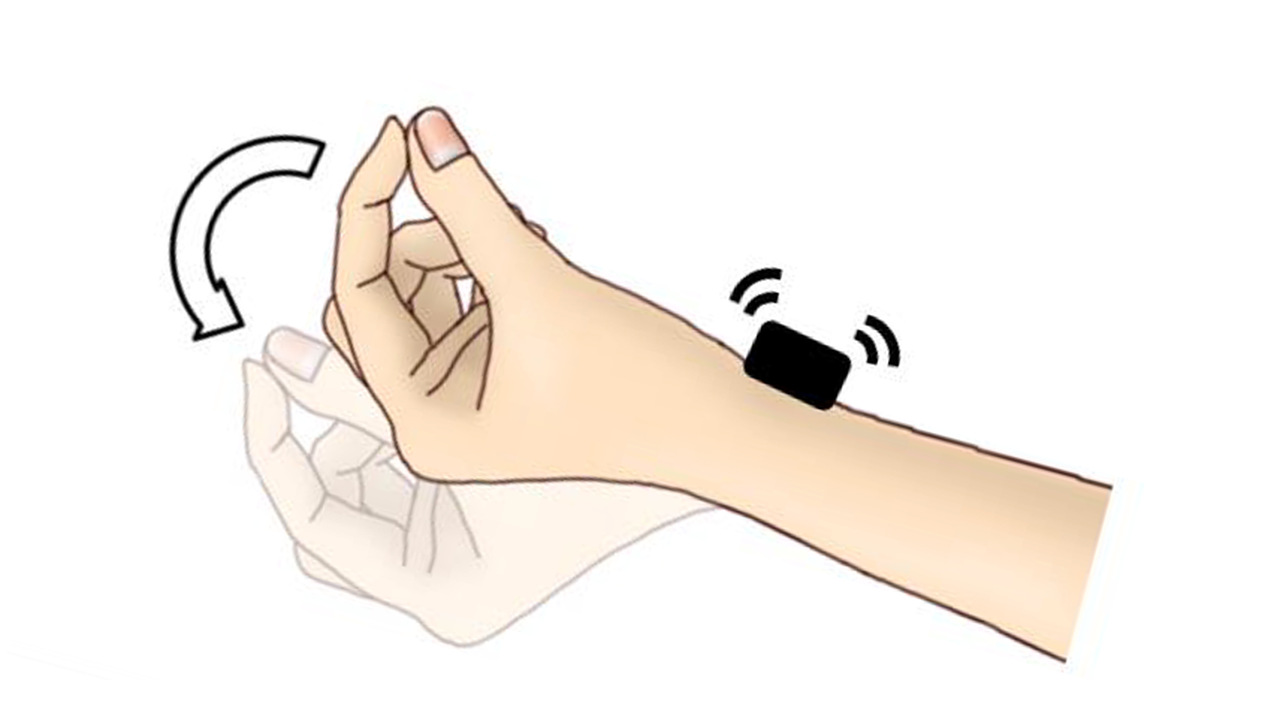
腱に対する振動刺激によって生じる運動錯覚を活用し、新しい情報提示手法の実現を目指しています。腱振動刺激は、実際には身体を動かしていないにもかかわらず、関節が動いたように感じさせることができます。We aim to build new ways of presenting information using the movement illusions produced by vibrating tendons. Tendon vibration can make a joint feel as if it has moved even though the body is still.
この現象は身体の状態を知覚する固有感覚に作用するため、身体内部に直接働きかける情報提示として利用できる可能性があります。運動錯覚を、方向や強度などの情報を身体感覚として表現する手段と位置づけ、UIへの活用に向けた研究を行っています。Because it acts on proprioception, the sense of the body's own state, it may enable information display that works directly inside the body. We treat the illusion as a means of expressing information such as direction and intensity through bodily sensation, and study its use in user interfaces.
腱振動による物体の変形錯覚Object Deformation Illusions by Tendon Vibration
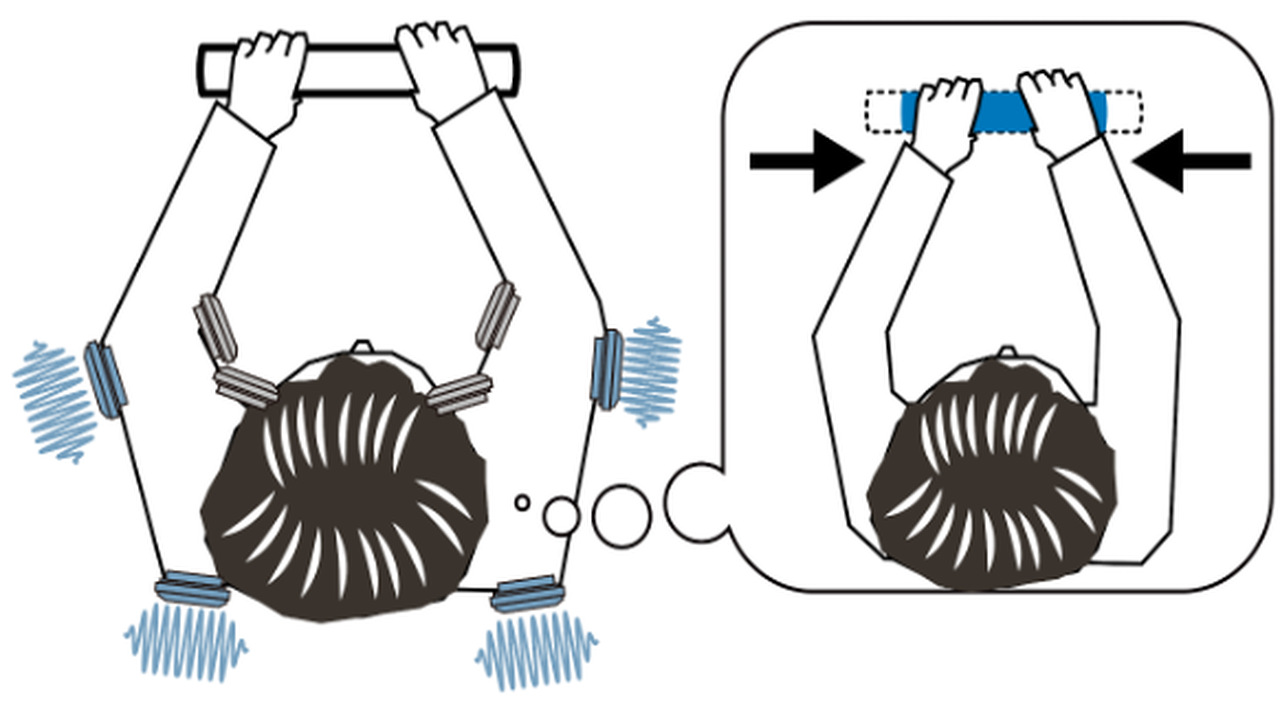
腱振動によって生じる運動錯覚を、棒の擬似的な伸縮を提示する手法に応用する研究を進めています。We apply movement illusions induced by tendon vibration to a method that makes a rod seem to stretch or shrink.
両手で物体に外力を加えて変形させるVRインタラクションへの応用や、操作のリアリティを高める可能性を検証しています。We are examining applications to VR interactions in which users deform objects with both hands, and the potential to make such manipulation feel more real.
VR空間の移動感覚に関する研究Sense of Self-Motion in VR
VR空間で歩行した感覚を生むために、実際に歩くことなく歩行したような感覚を生み出す手法の確立を目指しています。To create the feeling of walking in VR, we aim to establish methods that produce a walking sensation without actually walking.
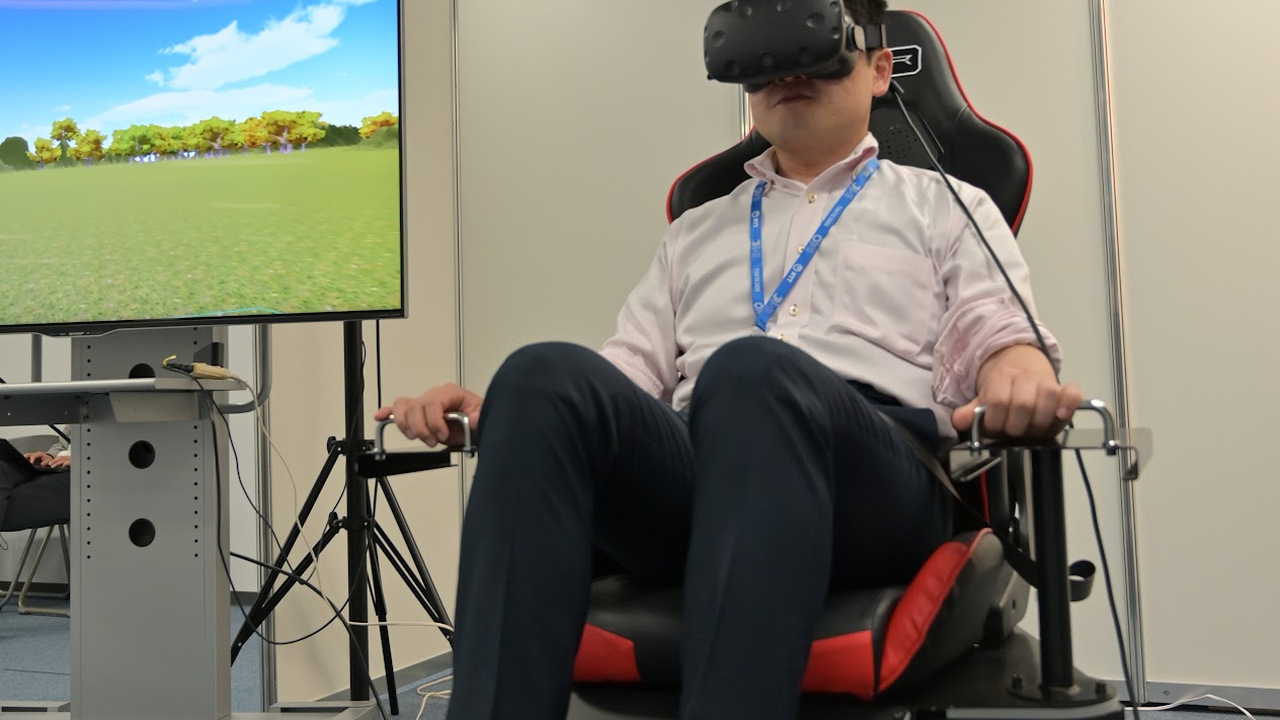
着座状態で視覚・前庭感覚・触覚に機械的・電気的刺激を提示し、擬似的な歩行感覚を生み出すVR技術を研究しています。We study VR techniques that present mechanical and electrical stimulation to the visual, vestibular and tactile senses of a seated user to generate a pseudo-walking sensation.
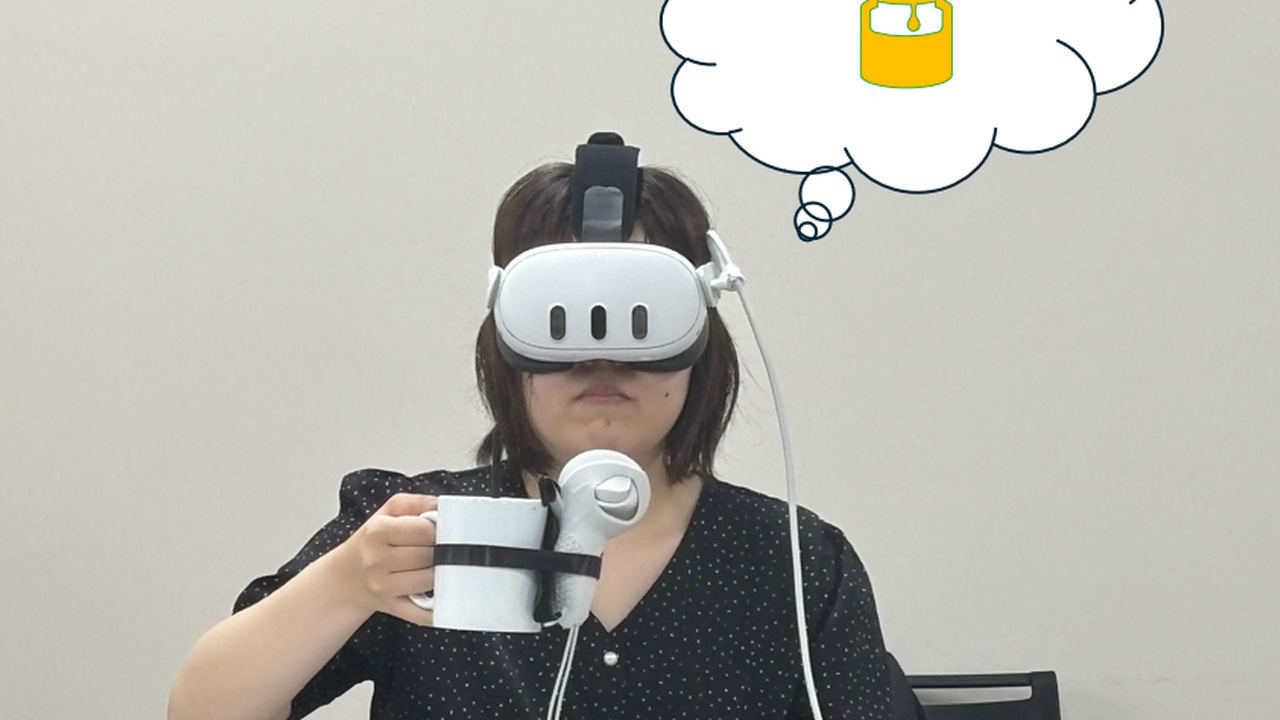
Pseudo-hapticsによる飲料体験変調の研究Modulating Drinking Experiences with Pseudo-Haptics
VRにおける疑似触覚フィードバックが、飲料の知覚にどのような影響を与えるかを調べています。We investigate how pseudo-haptic feedback in VR affects the perception of beverages.
実際の手の動きに対してVR内の手の表示を遅らせたり早めたりする視覚操作(Pseudo-haptics)が、飲用課題にどのような影響を及ぼすかを評価しました。We evaluated how visually delaying or advancing the virtual hand relative to the real hand (pseudo-haptics) influences a drinking task.
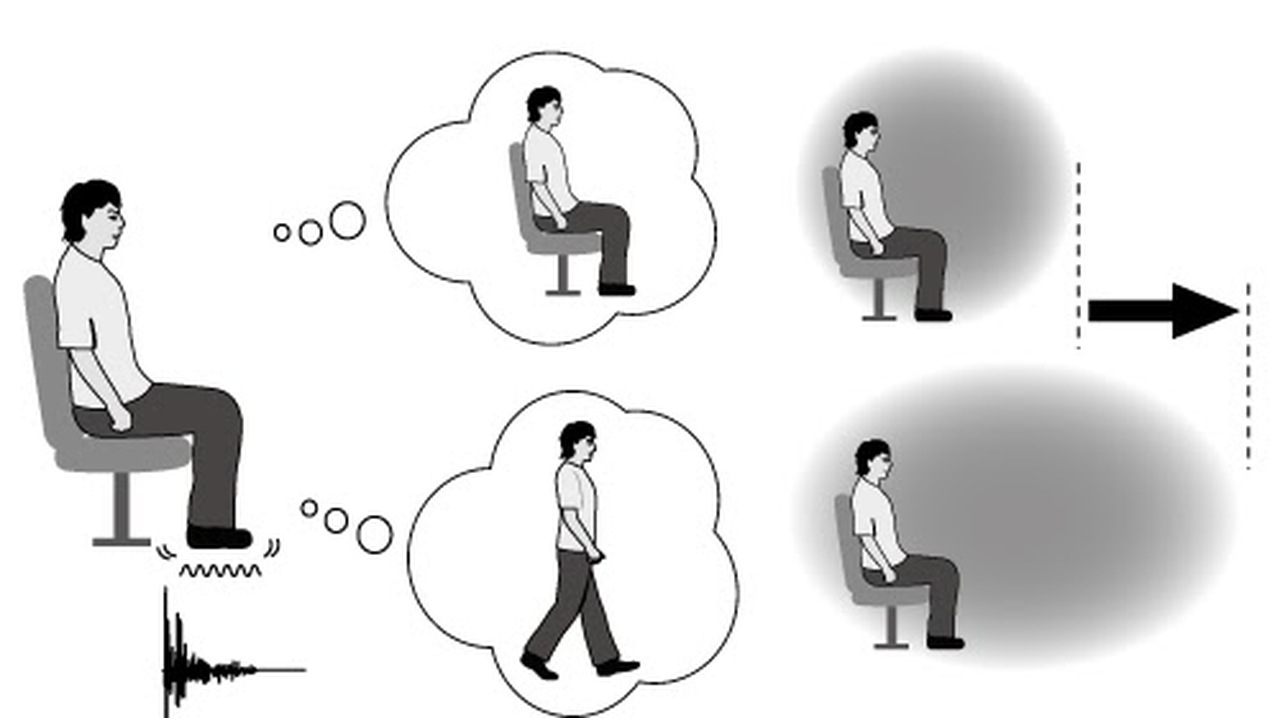
身体近傍空間のremappingの研究Remapping Peripersonal Space
身体のすぐ周りの空間(身体近傍空間)は、視覚・聴覚・触覚の情報が統合される特別な空間で、道具の使用や歩行などによって広がることが知られています。The space immediately around the body, called peripersonal space, is where visual, auditory and tactile information are integrated, and it is known to expand with tool use or walking.
歩行音に合わせた振動を足裏に与えると、実際には身体を動かしていないにもかかわらず、身体近傍空間の表象が拡張することを、近づいてくる音と触覚の多感覚処理を指標として示しました。前腕への振動では、この効果は生じませんでした。Using the multisensory processing of looming sounds and touch as a measure, we showed that vibrations on the soles of the feet based on footstep sounds extend the representation of peripersonal space without any body movement. Vibrations on the forearms did not have this effect.
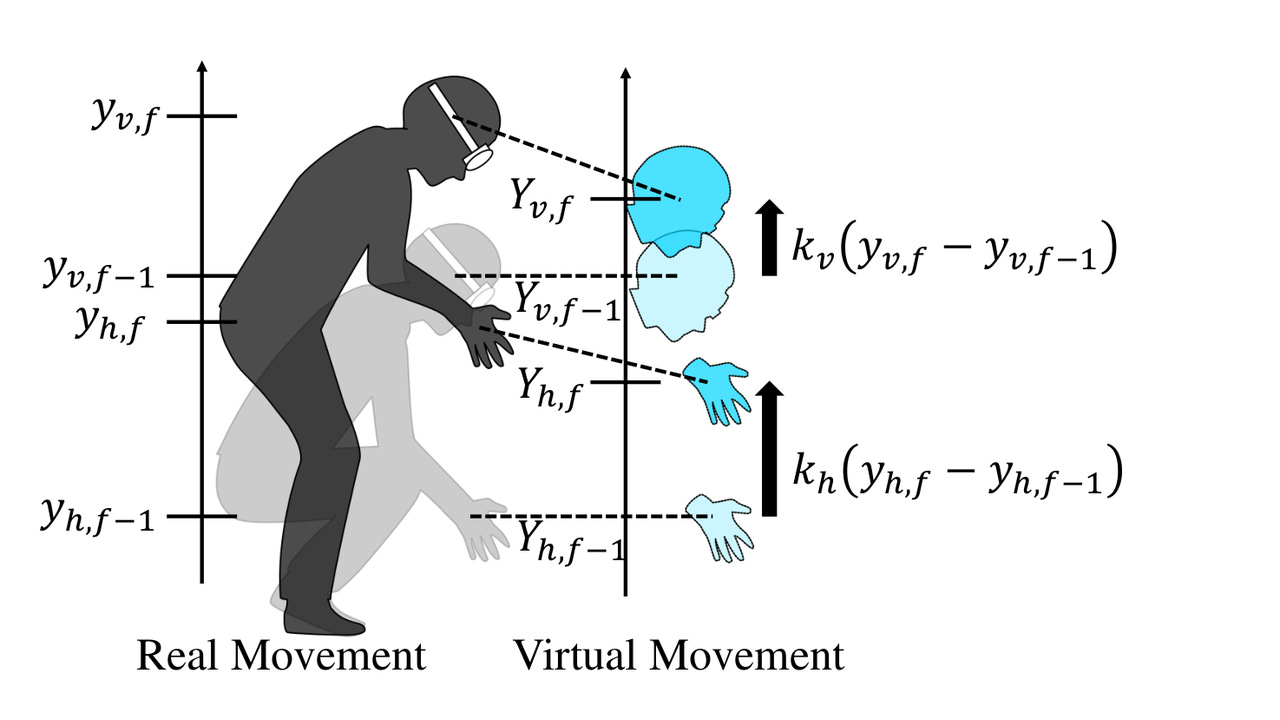
視点変化によるPseudo-hapticsPseudo-Haptics by Viewpoint Shifts
VR内の手や視点の見え方を実際の動きからずらすことで、重さなどの触覚を感じさせるPseudo-hapticsを研究しています。We study pseudo-haptics that make users feel weight and other haptic properties by shifting how the hand and the viewpoint move in VR relative to the actual movement.
物体を持ち上げる動作で、仮想の手の移動量に加えて仮想の視点の上下の移動量も操作することで、知覚される重さを変えられることを示しました。三菱電機との共同研究です。We showed that, when lifting an object, manipulating the vertical movement of the virtual viewpoint in addition to that of the virtual hand changes the perceived weight. This is a joint project with Mitsubishi Electric.
VR・メタバースによる教育・訓練Education & Training with VR and the Metaverse
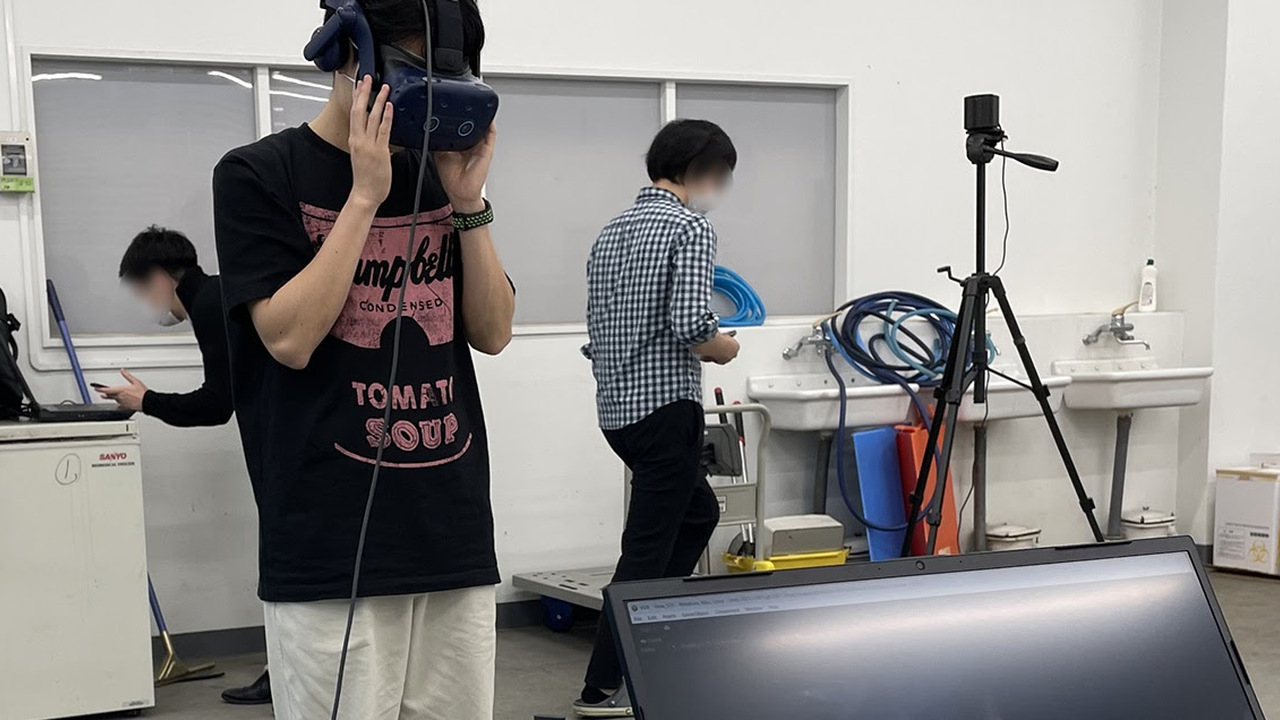
東京大学バーチャルリアリティ教育研究センターでの実践を通じて、VR・メタバースを講義や訓練に活用する方法を研究しています。Through practice at the UTokyo Virtual Reality Educational Research Center, we study how to use VR and the metaverse in lectures and training.
ソーシャルVR空間でのVR講義VR Lectures in Social VR Spaces
新型コロナウイルス感染症(COVID-19)の世界的な拡大に伴い、大学でも対面講義から遠隔講義への変更を迫られました。As COVID-19 spread worldwide, universities had to shift from in-person to remote lectures.
東大VRセンターではVR講義を実施してきましたが、気軽に試してみたいという問い合わせが多いことから、バーチャルSNSのひとつであるclusterにVR講義用の教室を公開しました。交流の場として、カフェを模したスペースも公開しています。The UTokyo VR Center has been running VR lectures, and because many people asked to try them casually, we opened a VR lecture classroom on the virtual social platform cluster, along with a café-style space for socializing.
アバタ技術を使った効果的な遠隔講義の研究Effective Remote Lectures with Avatar Technology
アバタを使ったライバー(いわゆるVTuber)の登場など、自らの見た目を変えて情報発信をする場が増えています。しかし、見た目を変えた講師が情報を伝えることで、先生側・生徒側にどのような効果が得られるかは、まだ十分に明らかになっていません。With the rise of avatar-based streamers (so-called VTubers), more people share information with an altered appearance. However, the effects on teachers and students when a lecturer with a changed appearance teaches are not yet well understood.
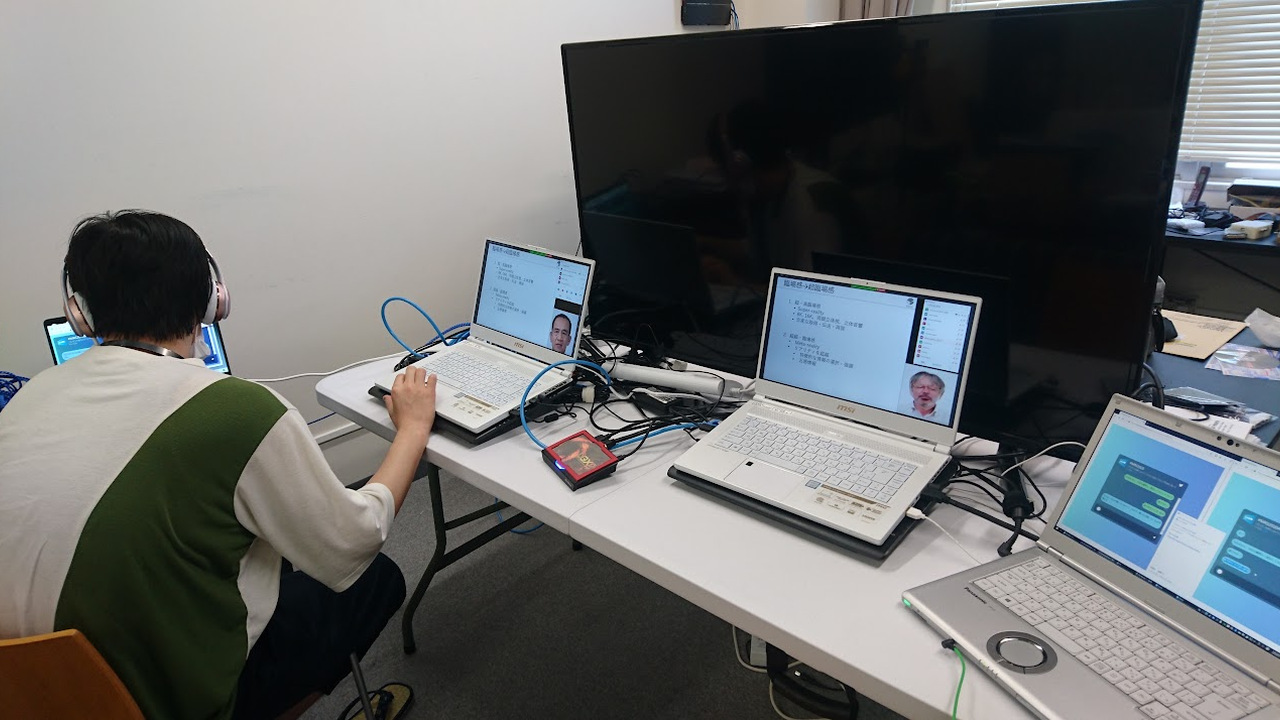
東大VRセンターでは、ディープフェイク技術で見た目を変えた状態でZoomによるオンライン授業を実施し、受講生の振る舞いを検証しています。At the UTokyo VR Center, we run online classes on Zoom with the lecturer's appearance altered by deepfake technology and examine how students behave.
バーチャルオムニバス講義Virtual Omnibus Lecture
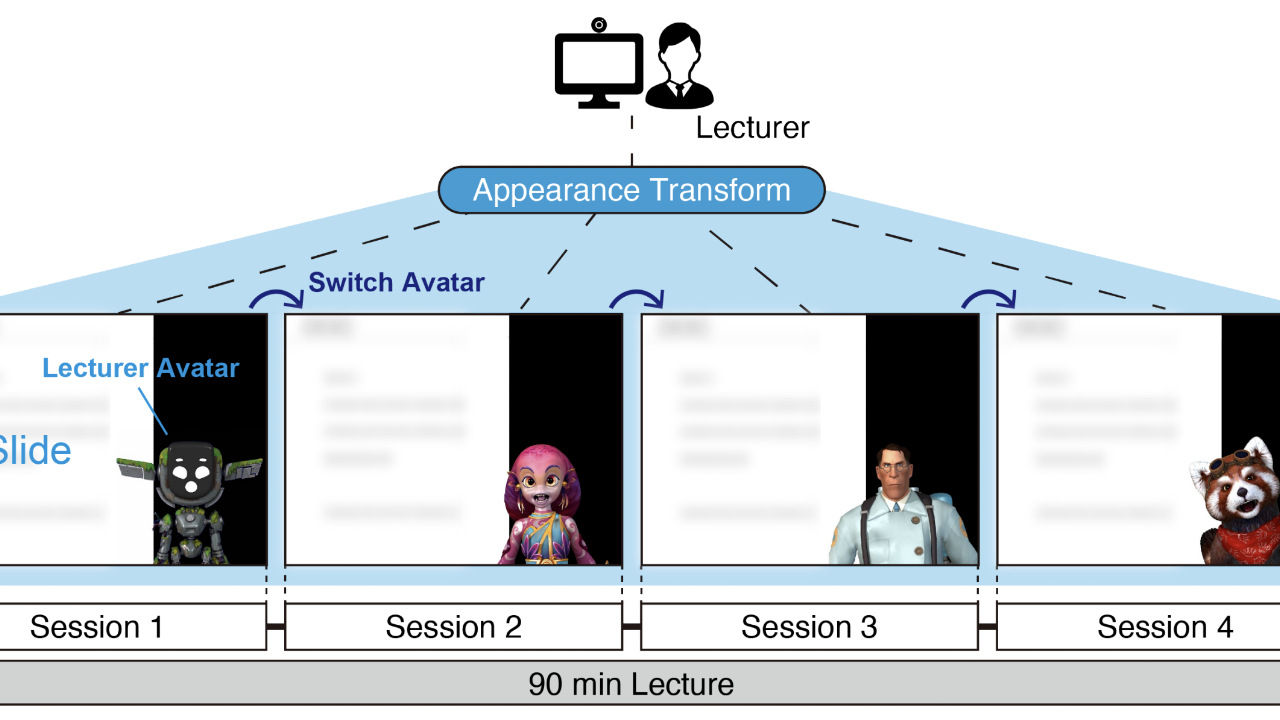
人の記憶は、周囲の風景や状況といった文脈(コンテキスト)の影響を受けます。この性質を遠隔講義に活かすため、1回の講義の中で講師が複数のアバタを切り替えて話す「バーチャルオムニバス講義」を提案しています。Human memory is influenced by context, such as surrounding scenery and situations. To make use of this in remote lectures, we propose the “Virtual Omnibus Lecture”, in which a lecturer switches between several avatars within a single lecture.
実際の講義でのフィールド実験では、4種類のアバタで受講した学生は、1種類のアバタで受講した学生よりも、直後の記憶テストの成績が高くなりました。In a field study in an actual course, students who attended a lecture given with four avatars scored higher on an immediate memory test than those who attended with a single avatar.
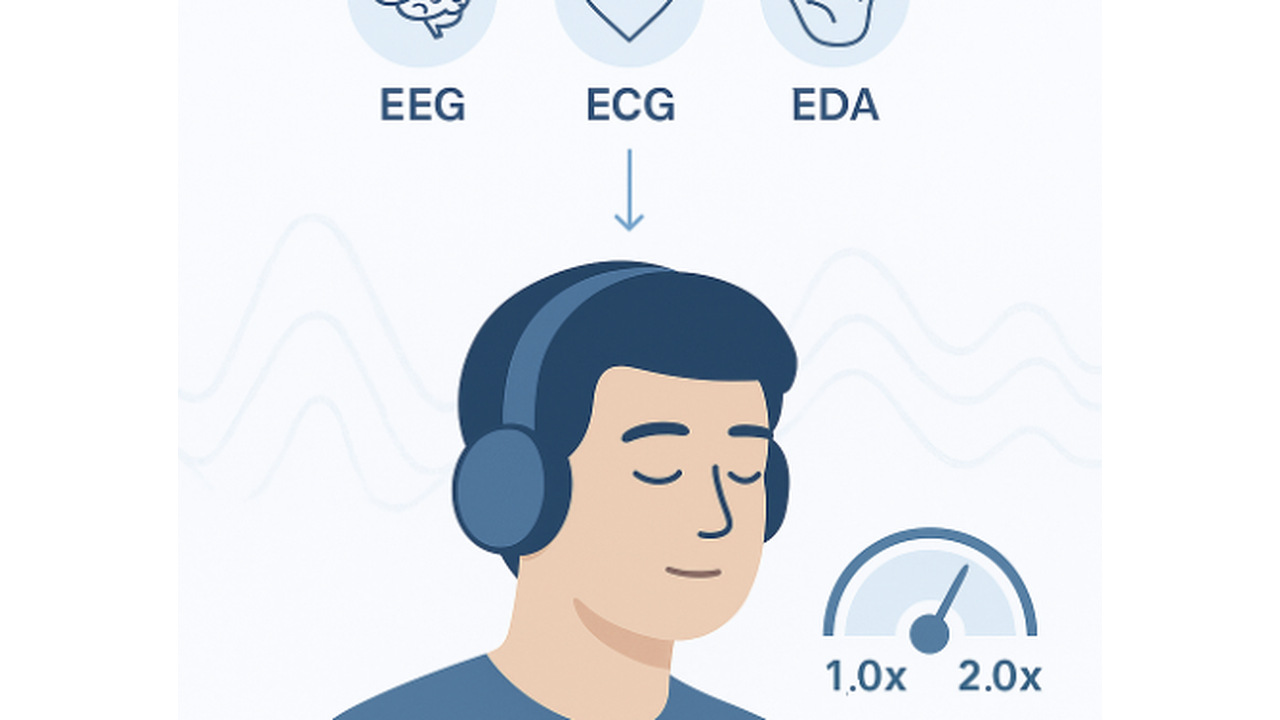
動画や音声コンテンツを倍速で再生する視聴スタイルが広まっています。Watching videos and listening to audio at increased playback speed has become common.
本研究では、脳波などの生体信号に基づいて集中度を計測し、音声コンテンツの再生速度を制御する手法の開発を進めています。We are developing a method that measures concentration from EEG and other biosignals and uses it to control the playback speed of audio content.
一人称視点の切り替えによる小動物の手術VR教材First-Person Surgical VR Materials for Small-Animal Surgery
獣医臨床教育において、技能依存度の高い外科手術の教育は、その複雑さと繊細さから常に難しい課題です。In veterinary clinical education, teaching highly skill-dependent surgery is always challenging because of its complexity and delicacy.
本研究では、術者の頭部に360度カメラを装着して撮影したVR映像を用い、一人称視点で体験できる獣医学教育用のVRシステムを開発し、従来の映像教材と学習効果を比較しました。We developed a VR system that lets learners experience surgery from the surgeon's first-person view, using 360° video recorded with a camera mounted on the surgeon's head, and compared its learning effects with conventional video materials.
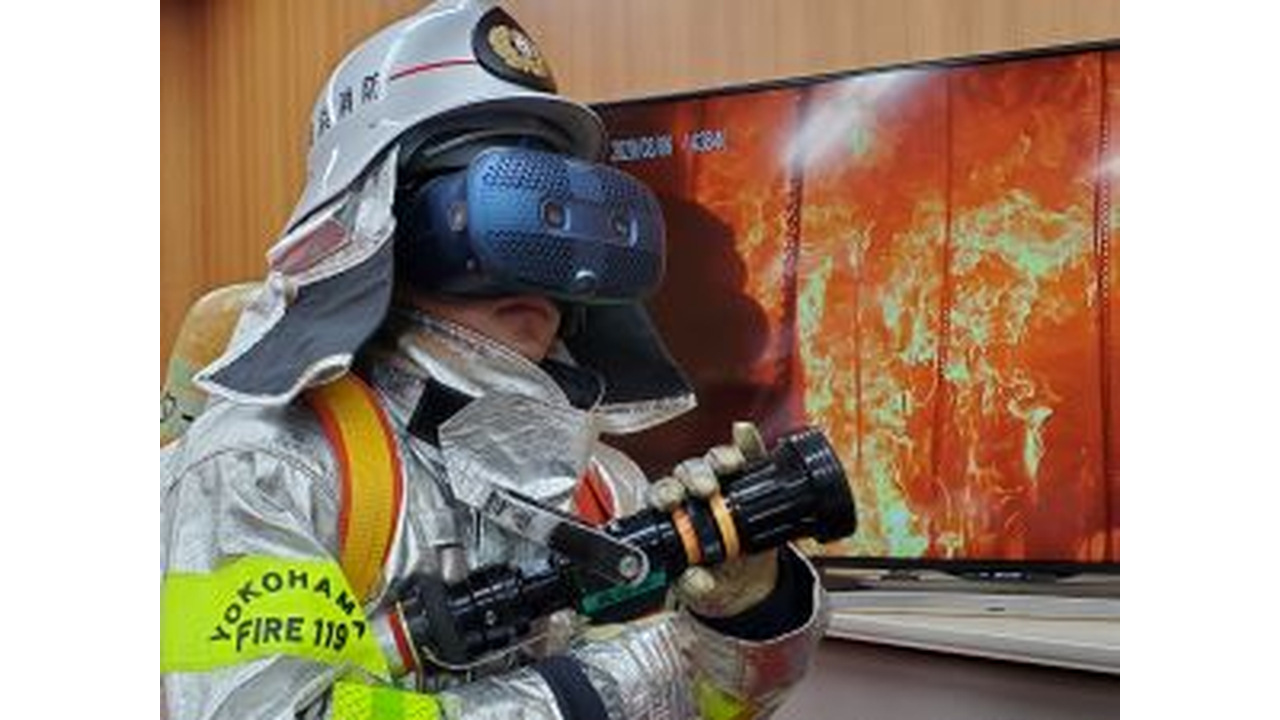
消防隊員のVR訓練VR Training for Firefighters
進行中のプロジェクトです。詳しくは東京大学バーチャルリアリティ教育研究センターのWebサイトをご覧ください。An ongoing project. See the website of the Virtual Reality Educational Research Center, The University of Tokyo, for details.
非対称振動による牽引力錯覚(ぶるなび)Pulling Illusion from Asymmetric Vibration (Buru-Navi)
非対称な振動で一方向に引っ張られる感覚を生み出す研究は、2005年の最初の発表から現在まで続いています。いま取り組んでいる研究は「擬似力覚表現の研究」をご覧ください。Our research on creating the sensation of being pulled in one direction with asymmetric vibration has continued from our first presentation in 2005 to the present. For our ongoing work, see Pseudo-Force Presentation.
2026
視覚の動きと組み合わせた牽引力錯覚Pulling Illusion Combined with Visual Motion Cues
非対称振動による牽引力錯覚に、視覚的な動きの手がかりを組み合わせたときの効果を調べました。We examined the effects of combining visual motion cues with the pulling illusion from asymmetric vibration.
AsymDrive:手の腱への非対称振動による力の錯覚AsymDrive: Force Illusions via Asymmetric Vibration of Hand Tendons
手の甲側と手のひら側の腱に非対称振動を与えることで、指先に何も着けずに力の錯覚を生み出す手法「AsymDrive」を提案しました。We proposed AsymDrive, which creates force illusions without anything on the fingertips by applying asymmetric vibrations to the tendons on the back and palm sides of the hand.
座面に複数の振動子を並べて非対称振動を与えることで、座っている身体が引っ張られるような力を感じさせる手法を研究しました。By applying asymmetric vibrations through vibrators distributed across a seat, we studied how to make a seated person feel as if the body is being pulled.
TractFree:指を空けたまま引っ張られる感覚と重さを提示TractFree: Traction and Weight with the Fingers Left Free
薬指・小指と手のひらに巻くバンドに2つの振動子を組み込み、親指や人差し指をふさがずに、上下方向に引っ張られる感覚や重さを提示する装置を開発しました。VRのコントローラやハンドトラッキングと一緒に使えます。We developed a band worn on the ring finger, little finger and palm with two vibrators that presents vertical pulling and weight sensations without occupying the thumb or index finger, so it can be used together with VR controllers and hand tracking.
運動錯覚による牽引力錯覚の増強Enhancing the Pulling Illusion with Kinesthetic Illusions
腱振動によって手が動いたように感じる運動錯覚を、非対称振動による牽引力錯覚と組み合わせることで、知覚される力の感覚が強まることを示しました。We showed that combining a kinesthetic illusion of hand movement induced by tendon vibration with the pulling illusion from asymmetric vibration strengthens the perceived force.
自己アバタの遅延と「ねじれ」の錯覚Self-Avatar Delay and the Illusion of Being Twisted
身体がねじられるように感じる錯覚で知覚される方向が、手や腕の自己アバタの動きの遅れによってどのように変わるかを調べました。We examined how a delay in the motion of a hand-and-arm self-avatar changes the direction perceived in an illusory sensation of being twisted.
指先でつまんだ物の重さの錯覚Heaviness Illusion for Pinched Objects
指先に重力の向きの非対称振動を与えると、指でつまんだ物体が重く感じられることを示しました。We showed that asymmetric oscillation in the direction of gravity on the fingertips increases the perceived heaviness of a pinched object.
牽引力錯覚の研究動向(解説論文)Review of Research on the Pulling Illusion
非対称振動による牽引力錯覚について、これまでの研究の流れを提示手法・知覚の仕組み・応用の観点から整理した解説論文です。A review paper that organizes research on the pulling illusion from asymmetric vibration in terms of presentation methods, perceptual mechanisms and applications.
手を動かすと力の方向がわかりやすくなるActive Hand Movement Improves Perceived Force Direction
引っ張られる感覚を生む装置を持った手を自分で動かすと、じっとしているときよりも力の方向を正しく知覚できるようになることを示しました。We showed that people perceive the direction of the illusory force more accurately when they move the hand holding the device themselves than when they keep it still.
細かな突起に軽く触れて方向を感じやすくするLight Touch on a Pillar Array Improves Direction Perception
細かな突起が並んだ表面に軽く触れながら非対称振動を受けると、引っ張られる方向がずっとわかりやすくなることを示しました。We showed that lightly touching a surface with an array of small pillars greatly improves perception of the pulling direction induced by asymmetric vibration.
非対称に振動する親指ほどの大きさの振動子で、はっきりと引っ張られる感覚を生み出せることを示し、これを使って人の動きを誘導する「ぶるなび3」を開発しました。We showed that a thumb-sized vibrator oscillating asymmetrically can create a distinct pulling sensation, and used it to develop Buru-Navi3, which guides people’s movements.
フライホイールによる回転力(トルク)の錯覚Torque Illusion with a Flywheel
止まっているフライホイールを急に回してすぐ止めるといった、短く非対称な回転を与えると、手に持った装置からねじるような向きのある回転力を感じさせられることを示しました。We showed that brief, asymmetric rotation of a flywheel—such as suddenly spinning it up from rest and then stopping it—makes a handheld device convey a directional twisting force (torque).
引っ張られる感覚による歩行者の経路案内Pedestrian Route Navigation with the Pulling Sensation
手を動かして引っ張られる感覚を確かめながら進む、歩行者向けの経路案内を提案し、カメラとマーカを使って装置の位置と向きを推定する仕組みも開発しました。We proposed pedestrian route navigation in which users actively check the pulling sensation by moving their hands, and developed a method that estimates the device’s position and orientation with a camera and markers.
パルス状の刺激による牽引力錯覚Pulling Illusion from Pulse-Like Stimuli
多気筒エンジンのように複数のパルスを組み合わせて、なめらかに引っ張られる感覚を作る装置(NOBUNAGA)を開発し、パルスの幅や間隔が引っ張られる感覚に与える影響を調べました。繰り返し叩くような力による提示も研究しました。We developed NOBUNAGA, which combines multiple pulses like a multicylinder engine to create a smooth pulling sensation, and examined how pulse width and interval affect the sensation. We also studied presentation with repetitive knocking forces.
牽引力錯覚による視覚障害者の歩行ナビゲーションWayfinding for Visually Impaired People with the Pulling Illusion
非対称振動による牽引力錯覚を使い、手に持った装置が進むべき方向へ引っ張るように感じさせることで、目の不自由な人を目的地まで案内する携帯型の歩行ナビゲーションを開発しました。8方向の提示や、緊急時の避難誘導への応用も研究しました。Using the pulling illusion from asymmetric vibration, we developed a handheld wayfinder that guides people with visual impairments to their destination by making the device feel as if it pulls them in the direction to go. We also studied guidance in eight directions and its use for evacuation in emergencies.
非対称振動による重さの錯覚Heaviness Illusion from Asymmetric Oscillation
手に持った物体を非対称に振動させると、実際よりも重く、あるいは軽く感じられることを示しました。We showed that oscillating a handheld object asymmetrically makes it feel heavier or lighter than it actually is.
引っ張られる感覚で人を案内する触覚ナビゲーションを、場所を選ばずに使える仕組みとして提案し、広い空間での社会的な応用を検討しました。We proposed location-free haptic navigation that guides people with the pulling sensation, and explored its social applications in large areas.
押す・引く感覚を生み出す小型の機構Compact Mechanisms for Pushing and Pulling Sensations
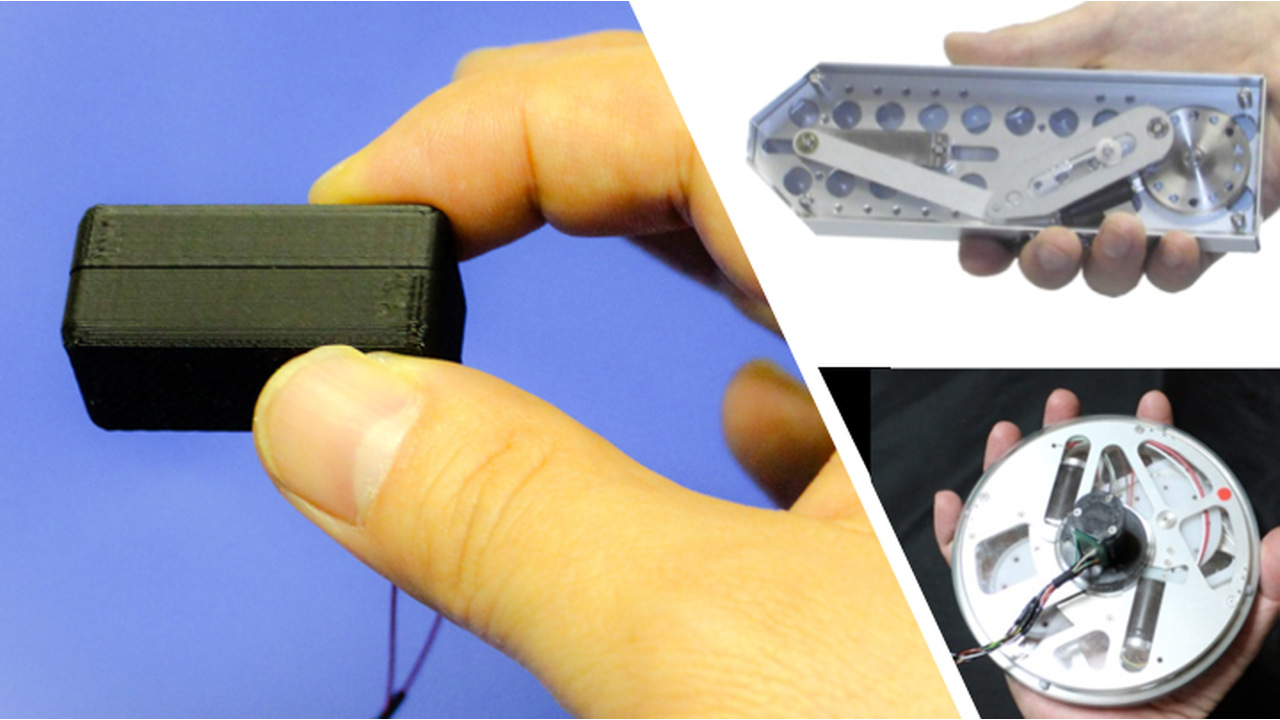
非対称な加速度を効率よく生み出すため、2層のスライダクランク機構や、ばねとカムを使った機構を設計し、どこにも固定せずに押す感覚・引く感覚を提示できる手持ち型の力覚ディスプレイを開発しました。To generate asymmetric acceleration efficiently, we designed a double-layer slider-crank mechanism and a spring-cam mechanism, and developed handheld force displays that present pushing and pulling sensations without being grounded.
ぶるなび:手に持った装置で引っ張られる感覚Buru-Navi: Feeling Pulled by a Handheld Device
手に持った装置で引っ張られる感覚を生み出すインタフェース「ぶるなび」を開発し、その感覚が生じる条件や、力の方向をどの程度正しく感じ取れるかといった知覚特性を調べました。We developed Buru-Navi, an interface that creates a pulling sensation from a handheld device, and studied the perceptual characteristics of the sensation, such as the conditions under which it arises and how accurately its direction is perceived.
知覚の非線形性を利用した牽引力錯覚の提案Proposing the Pulling Illusion Based on Perceptual Nonlinearity
人は速い加速度を遅い加速度よりも強く感じます。この知覚の非線形性に着目し、往復運動の加速度を行きと帰りで非対称にすることで、どこにも固定しない装置でも一方向に引っ張られる力を感じさせる手法を提案し、方向を答える実験で評価しました。People perceive rapid acceleration more strongly than slow acceleration. Focusing on this nonlinearity, we proposed making the acceleration of a back-and-forth motion asymmetric so that even an ungrounded device makes people feel pulled in one direction, and evaluated it in direction-judgment experiments.
外集団のアバタになる体験と集団への態度Embodying an Outgroup Avatar and Intergroup Attitudes
他の集団の人のアバタになる体験と、その集団の人との接触を組み合わせ、集団への態度に与える影響(逆効果を含む)を調べました。We combined embodying an avatar of another group with intergroup contact and examined the effects on attitudes toward that group, including backfire effects.
水を使わずに、気流と温度の対比で足湯の感覚を再現するバーチャル足湯を開発し、リラクゼーション体験としての効果を評価しました。We developed a waterless virtual footbath that recreates the feeling of a footbath with airflow and thermal contrast, and evaluated it as a relaxation experience.
遠隔操作する代理のトレーナーを使った合気道の練習や、2人の動きを混ぜ合わせたアバタ(ムーブメントブレンディング)が相手の印象に与える影響を研究しました。We studied Aikido practice with a remotely controlled proxy trainer, and how avatars that blend the movements of two people affect impressions of the partner.
Pseudo-hapticsによる重さ知覚と商品の価値評価Pseudo-Haptic Heaviness and Product Valuation in VR
Pseudo-hapticsで物の重さの感じ方を変えると、VR空間での商品の価値の評価にどのような影響があるかを調べました。We examined how changing perceived heaviness with pseudo-haptics affects how people value products in VR.
腱振動によるPseudo-hapticsの増強Enhancing Pseudo-Haptics with Tendon Vibration
腱振動による運動錯覚を、VRの視覚操作で力の感覚を生み出す擬似触覚(Pseudo-haptics)と組み合わせ、その効果を強める手法を研究しました。We combined kinesthetic illusions induced by tendon vibration with pseudo-haptics, which creates force sensations through visual manipulation in VR, to strengthen its effects.
上下方向の移動感覚(浮遊感・ベクション)Vertical Self-Motion: Floating and Vection
足裏への振動で飛行や浮遊の感覚を高めたり、骨伝導振動の周波数が上下方向のベクション(自分が動いているように感じる錯覚)に与える影響を調べたりしました。We enhanced the sensation of flying and floating with foot-sole vibration, and examined how the frequency of bone-conducted vibration affects vertical vection, the illusion of self-motion.
ソーシャルVRユーザーのプロテウス効果The Proteus Effect among Social VR Users
ソーシャルVR(VRChat)の利用者を対象に、芸術家らしい見た目のアバタを使うと、ブレインストーミングでのアイデアの出方が変わるか(プロテウス効果)を調べました。With VRChat users, we examined whether using an artist-like avatar changes idea generation in brainstorming (the Proteus effect).
足首の腱刺激による身体傾斜・坂道の知覚Body Tilt and Slopes via Ankle Tendon Stimulation
足首の腱への電気刺激で、身体が前後左右に傾く感覚や坂道を歩いている感覚を生み出しました。リダイレクテッドウォーキングなどへの応用も研究しました。Electrical stimulation of the ankle tendons produced sensations of the body tilting and of walking on a slope. We also studied applications such as redirected walking.
ソーシャルVRでのアバタの長期利用と身体所有感Long-Term Avatar Use and Body Ownership in Social VR
ソーシャルVRで同じアバタを長く使い続けることが、アバタを自分の身体のように感じる感覚(身体所有感)に与える影響を調べました。We examined how long-term use of the same avatar in social VR affects the illusion of virtual body ownership (IVBO).
前庭刺激による旋回・歩行感覚Turning and Walking Sensations via Vestibular Stimulation
平衡感覚をつかさどる前庭への刺激を用いて、歩行VRで曲がる感覚を表現したり、前庭電気刺激と足裏振動を組み合わせて歩行感覚を高めたりする手法を研究しました。Using stimulation of the vestibular system, which governs balance, we expressed turning in walking VR and combined galvanic vestibular stimulation with foot-sole vibration to enhance the sensation of walking.
足裏振動と映像によるバーチャル歩行Virtual Walking with Foot Vibration and Visuals
揺れを含む視覚映像(オプティックフロー)や全天球映像、一人称視点の自己アバタと、足裏への振動を同期させ、実際には歩かずに歩いているような感覚を高める手法を研究しました。We synchronized foot-sole vibration with oscillating optic flow, omnidirectional movies and a first-person self-avatar to enhance the sensation of walking without actually walking.
カーソル操作と過渡振動による擬似的な衝突感Pseudo-Impact from Cursor Motion and Transient Vibration
マウスカーソルが仮想の物体に触れた瞬間に、カーソルの動きの変化と短い触覚刺激(単発のパルスや減衰振動)を組み合わせて与えることで、強い振動感なしに、はっきりとした衝突感を生み出せることを示しました。We showed that combining a change in cursor motion with a brief tactile stimulus (a single pulse or a damped oscillation) at the moment a mouse cursor touches a virtual object creates a clear sense of impact without a strong sensation of vibration.
モーションチェアの傾きによる路面の起伏の知覚Perceiving Terrain through Motion-Chair Pitch
モーションチェアを前後に傾ける(ピッチ回転)ことで、路面の起伏の感じ方がどう変わるかを調べました。We examined how tilting a motion chair forward and backward (pitch rotation) changes the perceived shape of the ground surface.
受動的な身体運動による疑似歩行感覚Pseudo-Walking from Passive Whole-Body Motion
上下方向の揺れと旋回方向の受動的な全身運動を組み合わせたり、腕振りや脚の動きを受動的に与えたりすることで、実際には歩かなくても歩いているような感覚を生み出しました。By combining passive whole-body motions in the heave (up–down) and yaw (turning) directions, and by passively moving the arms and legs as in arm swinging and stepping, we created the sensation of walking without actually walking.
複数の気流をぶつけて向きのある風を作る手法や、風を使って身体の動きや旋回の感覚を高めるVRを研究しました。We studied a method for generating directional wind by colliding airflows, and VR that uses wind to enhance the sensation of body motion and turning.
触覚刺激による自己運動感覚Self-Motion Sensation from Tactile Stimulation
座面や胴体に流れるような触覚刺激(触覚の仮現運動)を与えると、前に進んでいると感じる速さが変わることを示し、レース体験などのVRに応用しました。We showed that tactile stimulation that seems to flow across the seat or torso (tactile apparent motion) changes the perceived speed of forward self-motion, and applied it to VR such as racing experiences.
映像や音に加えて、座席の動き・風・においなどを組み合わせ、ある人の体験を別の人が自分の身体で追体験できる「五感シアター」を、他大学と共同で研究しました。宇宙体験やデジタルミュージアムなどのコンテンツも制作しました。With other universities, we studied the Five Senses Theater, which combines seat motion, wind, scent and more with video and sound so that one person’s experience can be relived through another’s body. We also created content such as a space experience and a digital museum.
触覚の錯覚による形状提示Presenting Shapes with Tactile Illusions
触れている物体の輪郭が、実際より伸びたり縮んだりして感じられる触覚の錯覚を利用して、形を提示する触覚ディスプレイ(Embossed touch display)を研究しました。We studied the Embossed Touch Display, which presents shapes by exploiting a tactile illusion in which the contours of touched objects feel elongated or shrunk.
視線の動き(サッカード)を使った情報提示Information Display Using Saccadic Eye Movements
視線を素早く動かす「サッカード」の瞬間にだけ映像が見えるディスプレイを開発し、視線を動かした人にだけ情報を見せる、公共空間での情報提示などに応用しました。We developed a display whose image is visible only at the moment of a saccade, a rapid eye movement, and applied it to presenting information in public spaces that only people who move their eyes can see.
盲ろう者・視覚障害者のための点字インタフェースと歩行支援Braille Interfaces and Wayfinding for Deaf-Blind and Visually Impaired People
高密度に配置したRFIDタグを使い、言語と非言語の情報を組み合わせて盲ろう者を案内する歩行支援システム(Virtual Leading Blocks)や、屋外でオーボエのように持って使う点字インタフェース、点字の入出力ができる携帯型の触覚ディスプレイを開発しました。We developed Virtual Leading Blocks, a wayfinding system that guides deaf-blind people by combining verbal and nonverbal information with densely placed RFID tags, an oboe-like Braille interface for outdoor use, and a handheld haptic display with Braille input and output.
VR・メタバースによる教育・訓練Education & Training with VR and the Metaverse
2025
テキストからのアバタ動作の生成Generating Avatar Motion from Text
文章から動画を生成し、その動画からアバタの動きを作るパイプラインを提案し、リアルなアバタアニメーションとしての品質をユーザー実験で評価しました。We proposed a pipeline that generates video from text and then avatar motion from that video, and evaluated its quality as realistic avatar animation in a user study.
VR漫才トレーニング(吉本興業との共同研究)VR Manzai Training (with Yoshimoto Kogyo)
お笑いコンビ NON STYLE の石田明さんらと、漫才の掛け合いを身体の動きとともに体験・練習できるVRシステムを開発し、「掛け合いプレゼン力」の向上を目指しました。With Akira Ishida of the comedy duo NON STYLE and others, we developed a VR system for experiencing and practising the back-and-forth of manzai with the whole body, aiming to improve presentation skills in dialogue.
立体視テレプレゼンスと遠隔の空間理解Stereoscopic Telepresence and Remote Spatial Understanding
頭を回しても映像がぶれにくい全方位の立体視カメラ(TwinCam)を開発し、その後、頭を回しても光軸と瞳孔間距離を一定に保つ立体視テレプレゼンスシステム(TeleParallax)も開発しました。また、ビデオ通話で全天球画像を送り、遠隔地の空間を理解しやすくする手法を研究しました。We developed TwinCam, an omnidirectional stereoscopic camera that keeps images steady when the head turns, and later TeleParallax, a stereoscopic telepresence system that keeps the optical axes and interpupillary distance constant during head rotation. We also studied a method of sending spherical images over video chat to make remote spaces easier to understand.
スマートフォンによる胸骨圧迫(心臓マッサージ)の計測Measuring Chest Compressions (CPR) with a Smartphone
スマートフォンのセンサを使い、心臓マッサージ(胸骨圧迫)の深さとテンポを推定する手法を提案しました。We proposed a method that estimates the depth and rate of chest compressions during CPR using smartphone sensors.